


As radiant heating systems become increasingly popular in residential and commercial buildings, many flooring buyers ask an important question:
Can SPC flooring be installed over underfloor heating systems?
The answer is generally yes, but successful installation depends on selecting the correct SPC flooring specification and following proper installation requirements.
SPC flooring (Stone Plastic Composite flooring) is often considered suitable for radiant heating applications because its mineral-based rigid core provides good dimensional stability and efficient heat transfer compared with some traditional flooring materials.
For importers, distributors and project buyers, understanding the technical factors is important before selecting SPC flooring for heated environments.
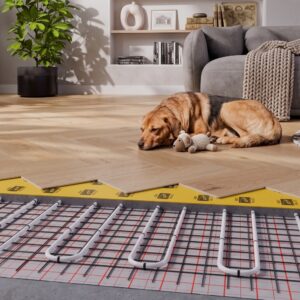
1. Why SPC Flooring Works with Radiant Heating Systems
The performance of flooring over radiant heating depends largely on:
- Thermal conductivity
- Dimensional stability
- Temperature resistance
- Installation method
SPC flooring contains a mineral composite core, which helps transfer heat efficiently from the heating system to the room surface.
Compared with some wood-based flooring products, SPC has lower sensitivity to moisture and temperature changes, making it suitable for many modern heating applications.
However, the final performance also depends on:
- Flooring thickness
- Underlayment type
- Heating system design
- Installation conditions
2. Thermal Performance of SPC Flooring
One important advantage of SPC flooring is its relatively efficient heat transfer characteristics.
The rigid core structure allows heat to pass through the flooring layer more effectively than materials with higher thermal resistance.
This can help provide:
- Faster warming response
- More even heat distribution
- Comfortable walking conditions
For projects using radiant heating, buyers should consider the complete flooring construction, including:
- SPC core thickness
- Wear layer
- Attached backing
- Total thermal resistance
A thicker floor is not always better for heated applications. The correct specification should balance durability requirements and thermal performance.
3. Dimensional Stability Under Temperature Changes
Temperature fluctuation is an important consideration for any flooring installed above heating systems.
Some flooring materials may experience movement when exposed to repeated heating and cooling cycles.
SPC flooring provides good dimensional stability because of its rigid mineral-based core.
This helps reduce risks related to:
- Expansion
- Contraction
- Joint movement
- Locking problems
The quality of the click system is also important because the locking profile must maintain connection strength during long-term use.
Learn more:
4. Compatible Radiant Heating System Types
SPC flooring can generally be used with different radiant heating systems, including:
Hydronic Underfloor Heating
This system uses warm water pipes installed below the floor surface.
Advantages include:
- Even heat distribution
- Efficient operation
- Common use in new construction projects
Electric Radiant Heating
Electric systems use heating cables or mats installed beneath the flooring.
Before installation, buyers should confirm that the specific SPC product is approved for use with the selected heating system.
The flooring supplier should provide technical recommendations according to the product structure.
5. Important Installation Guidelines for SPC Flooring Over Radiant Heat
Correct installation is essential for long-term performance.
Control Surface Temperature
The heating system should operate within the recommended temperature range provided by the flooring manufacturer.
In many applications, the surface temperature should not exceed approximately:
27°C (80°F)
However, project requirements should always follow the flooring specification and local installation standards.
Allow Proper Acclimatization
Before installation, SPC flooring should be stored and acclimated according to supplier recommendations.
This allows the material to adjust to the room environment before installation begins.
Maintain Expansion Gaps
Although SPC has excellent dimensional stability, installation still requires appropriate expansion space.
Typical installation requirements include:
- Expansion gaps around walls
- Correct transition profiles
- Proper subfloor preparation
Use Suitable Underlayment
The backing layer can affect both comfort and thermal performance.
Common options include:
- IXPE backing
- EVA backing
Different backing materials provide different acoustic and thermal characteristics.
Learn more:
IXPE vs EVA Underlayment: Choosing the Right Backing for SPC Flooring
6. SPC Flooring Compared with Other Materials for Radiant Heating
| Flooring Type | Heat Transfer | Dimensional Stability | Heating Compatibility |
| SPC Flooring | High | Excellent | Suitable for many systems |
| Hardwood Flooring | Lower | More sensitive | Requires careful selection |
| Laminate Flooring | Moderate | Depends on construction | Product-specific |
| Carpet | Low | Stable | Less efficient |
The final selection should consider the heating system, project environment and flooring specification.
7. Technical Factors Buyers Should Confirm Before Ordering
For importers and project buyers, the following information should be confirmed before purchasing SPC flooring for radiant heating projects:
Product Information
- Flooring thickness
- Wear layer specification
- Core structure
- Backing material
Technical Documentation
Request:
- Product technical data sheet
- Installation instructions
- Relevant test information
Project Requirements
Confirm:
- Heating system type
- Maximum operating temperature
- Installation environment
- Local building requirements
A professional supplier should be able to provide clear technical information before production.
SPC Flooring Supply for Heated Floor Projects
SENOINFI supplies SPC flooring solutions for residential and commercial applications where buyers require stable quality and flexible specifications.
Available options include:
- SPC click flooring
- Multiple thickness choices
- Different wear layer options
- EIR surface finishes
- IXPE and EVA backing solutions
For buyers sourcing SPC flooring for heated environments, selecting the correct product structure and installation method is essential for achieving stable long-term performance.
More technical information:
SPC Flooring: A Technical Guide to Rigid Core Waterproof Flooring