
SPC Flooring Click System Guide: How Locking Technology Improves Installation and Performance
For international flooring importers, distributors, and contract buyers, the mechanical locking system of SPC flooring is just as critical as core density and wear layer thickness. An engineered SPC flooring click system is a critical factor that directly governs installation speed, seam integrity, and vertical tensile resistance over the floor’s operational lifespan.
Understanding the mechanical tolerances, patented locking designs, and production precision behind SPC click systems is essential for evaluating China factory reliability and avoiding costly post-installation claims.
For a comprehensive overview of our full product lineup and manufacturing specifications, see:
SPC Flooring Wholesale and Manufacturing Solutions
1. What Is an SPC Flooring Click System?
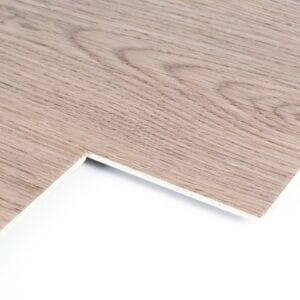
A professional SPC flooring click system consists of precision-milled tongue-and-groove profiles along the edges and ends of rigid planks.When engaged, these profiles interlock mechanically to create a seamless, adhesive-free floating floor.
Compared to traditional dry-back LVT or glued vinyl planks, click-lock SPC flooring delivers clear commercial advantages:
Adhesive-Free Floating Installation: Eliminates glue curing time, volatile organic compound (VOC) off-gassing, and adhesive failure caused by subfloor moisture emissions.
Rapid Jobsite Turnaround: Speeds up assembly by 30% to 50%, significantly reducing commercial and multi-family construction labor costs.
Non-Destructive Plank Replacement: Allows individual damaged planks to be disengaged and replaced without tearing up the entire subfloor assembly.
However, because SPC rigid cores feature an inorganic composite ratio of 70% to 75% calcium carbonate (CaCO3) blended with PVC resin, the core is substantially stiffer and more brittle than flexible LVT. Precision milling using high-grade tooling is vital to prevent microscopic stress fractures along the locking tongue during machining and installation.
2. Mainstream Patented Click Systems in Global Trade
Choosing the correct SPC flooring click system allows international distributors to balance rapid jobsite assembly with intellectual property protection.
Unilin Click System (Angle-Angle / Angle-Snap)
Locking Mechanism: The plank long edge is inserted at an angle (approx. 20° to 30°) and rotated downward, while the short end locks securely via calibrated elastic deflection.
Engineering Advantages: Exceptional vertical locking strength and horizontal tensile resistance. Widely recognized across international retail and commercial distribution networks.
Target Projects: High-traffic commercial interiors, multi-family housing corridors, and retail developments.
I4F Drop-Lock System (Push-Down / Drop-Click)
Locking Mechanism: The long side connects via conventional angle insertion, while the short side locks vertically by dropping down and pressing into a precision-engineered locking tongue.
Engineering Advantages: Eliminates tapping mallets along the short joints, reducing the risk of edge breakage during high-speed commercial installations by up to 30%.
Target Projects: Large-scale modular developments, hotel guest rooms, and fast-track refurbishment contracts.
Technical Performance Comparison of Mainstream Click Systems
| Click System Profile | Installation Method | Tensile Resistance (ISO 24334) | Speed Advantage | Primary Commercial Applications |
| Unilin (Angle-Angle) | Angle-in and rotate downward | >= 2.0 kN/m (Long) / >= 3.0 kN/m (Short) | Industry baseline benchmark | High-traffic commercial, multi-family housing |
| I4F (Drop-Lock) | Long angle, short vertical press | >= 1.8 kN/m (Long) / >= 2.5 kN/m (Short) | 25% to 30% faster | Modular housing, rapid hotel renovation |
| Traditional Tap-Down | Angle insertion with hammer tapping | >= 1.5 kN/m | Baseline speed | Budget-sensitive light residential projects |
3. Critical Technical Parameters: What Buyers Must Inspect
A professional factory audit must extend beyond simply asking “which click profile do you cut?” Importers should verify physical inspection tolerances across three technical metrics:
1. Joint Tensile Strength (ISO 24334 Standard)
The interlocking joint must withstand constant thermal expansion and contraction cycles. Under standard ISO 24334 tensile testing protocols, industrial-grade SPC click profiles should deliver a long-side tensile resistance of >= 2.0 kN/m and a short-side resistance of >= 3.0 kN/m to resist seam separation under rolling casters and heavy static furniture loads.
2. Milling Profile Tolerances
Due to the abrasive nature of limestone-PVC composite cores, high-speed profile cutters experience continuous edge wear. Reliable manufacturers deploy polycrystalline diamond (PCD) tooling inspected on strict 4-hour cycles, maintaining profile tolerances within +/- 0.05 mm to prevent loose engagement or edge chipping.
3. Edge Height Deviation (Lippage) and Joint Gaps
Height Deviation (Lippage): Step variation between installed planks must be strictly controlled within <= 0.10 mm across the floor surface.
Joint Gaps: Seam spacing between connected planks must remain within <= 0.15 mm under standard room conditions.
For a complete pre-shipment quality control checklist covering profile gauges and lab testing protocols, read our technical guide:
SPC Flooring Quality Inspection Checklist: What Importers Should Verify Before Shipment
4. How Click Integrity Protects Waterproof Performance
While the calcium carbonate-PVC rigid core is 100% waterproof, surface liquids can penetrate the subfloor if joint milling lacks dimensional accuracy.
A high-precision SPC flooring click system creates an impermeable barrier against surface liquid penetration.
A precision-milled profile forms a continuous mechanical seal that blocks surface water from migrating into the acoustic backing layer or pooling against the concrete subfloor. For hospitality wet areas and residential kitchens, uniform joint tightness is the primary barrier against joint warping and subfloor bacterial growth.
To understand how attached acoustic backing interacts with subfloor moisture and sound reduction, see:
IXPE vs EVA Underlayment for SPC Flooring: How to Choose the Right Backing Layer
For specialized vertical wet-area applications requiring matching waterproof performance, explore:
Waterproof SPC Wall Panels for Commercial and Residential Interiors
5. How Plank Thickness Affects Click System Performance
Core thickness directly impacts the mechanical strength of the SPC flooring click system, determining profile tongue depth and vertical shear limits.
For cost-effective residential developments and container volume optimization:
4mm SPC Flooring Wholesale Specifications and Features
For heavy commercial traffic, hospital corridors, and subfloors with minor imperfections:
5mm Heavy-Duty SPC Flooring for Commercial and Residential Projects
For contract buyers evaluating wear resistance and core strength across high-traffic facilities, see:
SPC Flooring for Commercial Projects: Durability, Specifications, and Value
6. Factory Sourcing Checklist for Importers
Before signing commercial supply agreements with a Chinese manufacturer, ensure your quality assurance protocol covers:
Request Both Unassembled and Assembled Retained Samples: Evaluate manual angle insertion resistance, tactile joint smoothness, and edge alignment on a verified granite inspection flat. Evaluating the SPC flooring click system during sample inspection prevents costly field failures and warranty claims.
Inspect Automated Tenoner Profiling Equipment: Confirm the factory uses multi-axis tenoning machinery with online laser monitoring to detect tool wear in real time.
Verify Official Patent Licensing: For export shipments destined for North America, the EU, or Australia, confirm whether authentic Unilin or I4F carton licensing labels are applied to avoid customs seizures.
Synchronize Surface Texture with Edge Profiling: Deep EIR embossing requires synchronized tenoner cutting to prevent micro-fraying along the wear layer edge.
For synchronized natural wood grain textures with precision profiling, see:
EIR (Embossed in Register) SPC Flooring Wholesale Solutions
7. Frequently Asked Questions (FAQ)
Can damaged SPC planks with click systems be replaced individually?
Yes. For Unilin angle-angle profiles, planks near room edges can be disassembled sequentially. For middle-of-the-room repairs, a qualified flooring installer can remove the damaged plank using a plunge saw, remove the lower groove lip on the replacement plank, and secure the new board with high-strength cyanoacrylate adhesive without lifting the surrounding installation.
How does click precision prevent floor peaking and joint separation?
Joint separation results from insufficient profile tongue depth; a properly engineered SPC flooring click system eliminates gaps under continuous thermal stress.
Are official patent certification labels required for customs clearance?
In regulated import markets such as the USA and EU, official patent stickers (such as licensed Unilin or I4F barcodes) verify intellectual property compliance. Sourcing licensed profiles ensures smooth port clearance and eliminates patent infringement liabilities for distributors.
Sourcing Precision-Milled SPC Flooring from SENOINFI
At SENOINFI, every SPC plank is processed on advanced multi-axis tenoning lines equipped with continuous optical alignment. We supply international distributors, OEM brand owners, and project contractors with full-specification SPC flooring:
Rigid Core Thickness: 3.5mm, 4.0mm, 5.0mm, and 6.0mm engineered bases
Commercial Wear Layers: 0.3mm (12 mil) to 0.7mm (28 mil) virgin PVC protection
Acoustic Backing: 1.0mm to 1.5mm 100 kg/m3 high-density IXPE underlayment
Certified Locking Precision: Verified ISO 24334 tensile ratings with patent-authorized Unilin and I4F milling options
Contact our technical sales team today to request physical sample kits and factory-direct wholesale pricing for your upcoming container shipments.