


When selecting flooring for commercial projects, buyers usually consider more than appearance and initial purchase price.
Hotels, offices, retail stores, restaurants, rental properties and other commercial spaces can experience frequent foot traffic, furniture movement, regular cleaning and repeated daily use. These conditions make flooring specification an important part of overall project planning.
For developers, contractors, distributors and project buyers, three factors are particularly important:
- Durability
- Installation efficiency
- Long-term maintenance requirements
Commercial SPC flooring is often considered for these applications because its rigid core construction, surface protection options, click installation systems and moisture-resistant characteristics can meet a wide range of project requirements.
However, the performance of SPC flooring depends on the complete product construction and installation conditions rather than on one specification alone.
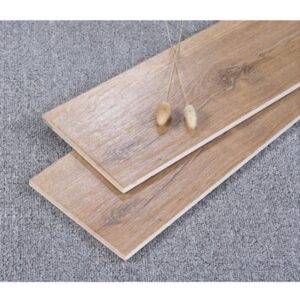
Why Commercial Projects Need Different Flooring Specifications
Commercial environments generally place different demands on flooring compared with many residential applications.
Depending on the project, flooring may need to withstand:
- High levels of foot traffic
- Furniture movement
- Frequent cleaning
- Spills and moisture exposure
- Repeated installation or renovation work
- Long operating periods
A flooring product that performs well in a residential environment may not necessarily have the same specification requirements for a busy retail store, hotel corridor or office building.
For this reason, commercial buyers should evaluate the complete flooring structure before ordering.
1. Wear Layer Selection Affects Surface Performance
The wear layer is one of the first specifications commercial buyers should examine.
The wear layer sits above the decorative layer and helps protect the flooring surface against normal use, including:
- Foot traffic
- Scuffing
- Surface wear
- Minor scratches
- Repeated cleaning
Common SPC flooring wear layer options include:
- 0.2mm
- 0.3mm
- 0.5mm
- 0.7mm
The appropriate specification depends on the application.
For example, a low-traffic office may have different requirements from a hotel lobby, retail store or other busy commercial area.
For a more detailed explanation of wear layer selection, see our SPC Flooring Wear Layer Guide.
The key point for buyers is that a thicker wear layer should be selected according to actual project requirements rather than simply choosing the highest available specification.
2. Rigid Core Stability Matters in Large Areas
The rigid core is another important factor in commercial SPC flooring.
SPC flooring uses a rigid core structure designed to provide dimensional stability during normal use. This can be particularly relevant for larger installation areas and projects exposed to changes in temperature or heavy furniture.
However, core stability depends on the overall product construction and manufacturing consistency.
Buyers should therefore pay attention to:
- Core composition
- Board density and consistency
- Thickness accuracy
- Dimensional stability
- Production batch consistency
A stable core alone does not guarantee successful installation. The subfloor, expansion requirements, installation method and click-lock system also influence the final result.
For more information about how production affects flooring performance, see SPC Flooring Durability: How Manufacturing Quality Affects Performance.
3. Moisture Resistance and Commercial Maintenance
Commercial flooring is frequently exposed to cleaning and occasional moisture.
One reason SPC flooring is considered for commercial interiors is its moisture-resistant rigid core structure. This makes it suitable for many areas where buyers want an alternative to wood-based flooring products.
Potential applications include:
- Hotels
- Offices
- Restaurants
- Retail stores
- Apartments
- Common areas
However, buyers should distinguish between the water-resistant characteristics of the flooring product and the water management of the entire installation.
Proper subfloor preparation, joint installation, perimeter detailing and maintenance procedures remain important.
For distributors, providing customers with clear maintenance instructions can also help reduce avoidable complaints after installation. Our SPC Flooring Care Guide for Distributors covers this topic in more detail.
4. Click Installation Can Improve Project Efficiency
Installation efficiency is another consideration for commercial projects.
Many SPC flooring products use click-lock systems that allow planks to connect without traditional adhesive installation.
A click system can provide practical benefits such as:
- Faster installation procedures
- A cleaner installation process
- Reduced dependence on adhesive
- Easier access for certain repair or replacement situations
- More efficient installation for renovation projects
However, installation speed depends on more than the locking mechanism.
The quality of the click system is influenced by:
- Edge profile precision
- Plank dimensions
- Thickness consistency
- Core stability
- Manufacturing tolerances
For commercial buyers, it is therefore useful to evaluate click performance during sample testing rather than judging it only from product specifications.
See SPC Flooring Click System Guide for a detailed explanation of how locking technology affects installation and floor performance.
5. Maintenance Requirements Affect Long-Term Project Value
The initial flooring price is only one part of the total cost of a commercial flooring project.
Project owners may also need to consider:
- Installation labor
- Cleaning requirements
- Routine maintenance
- Repair or replacement
- Downtime during renovation
- Product availability for future replacement
A flooring product that is easy to clean and maintain can be practical for facilities with regular daily operations.
For this reason, commercial buyers should ask suppliers about recommended:
- Cleaning methods
- Cleaning products
- Surface protection
- Furniture protection
- Replacement procedures
Maintenance requirements should also match the actual environment. A hotel, office, retail store and healthcare facility may have different cleaning procedures and operational requirements.
6. Choosing the Right Thickness for Commercial SPC Flooring
Thickness is another important specification, but thicker flooring does not automatically mean better performance.
Common SPC flooring thickness options include:
- 4mm
- 5mm
- 6mm
- 8mm
The right thickness depends on the complete product construction and project conditions.
Buyers should consider:
- Expected traffic
- Subfloor conditions
- Wear layer
- Click system
- Backing layer
- Installation method
- Project budget
For a detailed comparison, see our SPC Flooring Thickness Guide.
For commercial projects, it is usually more useful to evaluate the complete flooring specification rather than selecting a product based only on thickness.
7. Commercial SPC Flooring Should Be Evaluated as a Complete System
A commercial flooring product consists of multiple layers and components that work together.
Buyers should review:
| Specification | What Buyers Should Consider |
| Thickness | Suitable for project conditions |
| Wear layer | Traffic and surface-use requirements |
| Rigid core | Stability and dimensional consistency |
| Decorative layer | Design and market positioning |
| Surface finish | Cleaning and appearance requirements |
| Click system | Installation and joint performance |
| Backing | Installation and acoustic considerations |
| Testing | Applicable project and market requirements |
This approach is more useful than comparing suppliers based only on price per square meter.
8. Quality Control Is Important for Large Commercial Orders
A sample can demonstrate product appearance, but commercial buyers also need to consider whether the supplier can maintain consistent quality during mass production.
Important quality-control areas include:
Raw Material Control
Stable raw materials can help maintain product consistency and physical properties.
Dimension Control
Plank length, width and thickness need to remain within the agreed specification.
Surface Inspection
The decorative surface should be checked for appearance and production defects.
Click Profile Inspection
Locking edges should be checked for dimensional consistency and installation performance.
Batch Consistency
For large projects, consistency between production batches is particularly important.
Before placing a large order, buyers can request samples and confirm the agreed technical specifications in writing.
Our SPC Flooring Quality Inspection Checklist provides a more detailed procurement reference.
9. Documentation Matters for Commercial Projects
Commercial projects may require more documentation than standard residential orders.
Depending on the destination market and project requirements, buyers may request:
- Technical data sheets
- Product specifications
- Test reports
- Installation instructions
- Quality inspection records
- VOC-related documentation
- Fire-performance documentation
- Packaging information
The exact requirements vary by market and project.
Buyers should also confirm that the documents correspond to the actual product specification being ordered.
For more information, see SPC Flooring Certifications and Test Reports: A Guide for Importers.
10. How to Evaluate Commercial SPC Flooring Suppliers
For large commercial projects, supplier capability is as important as product specifications.
Before ordering, buyers should consider:
Production capability
Can the supplier maintain consistent quality for the required order volume?
Specification flexibility
Can the supplier provide different thicknesses, wear layers, surface finishes and backing options?
Quality control
Does the manufacturer have documented inspection procedures?
Product documentation
Can the supplier provide technical information and applicable test reports?
Delivery capability
Can the supplier coordinate production and export schedules according to the project timeline?
After-sales support
Can the supplier provide installation and product information when questions arise?
For a broader supplier evaluation process, see our SPC Flooring Supplier Checklist.
Commercial SPC Flooring from SENOINFI
SENOINFI supplies SPC flooring for distributors, contractors and commercial project buyers, with different product specifications available according to application and market requirements.
Available options include:
- Different flooring thicknesses
- Multiple wear layer specifications
- Wood and stone-look designs
- EIR and embossed surface options
- Click-lock systems
- IXPE and EVA backing options
- OEM and private-label solutions
For many projects, buyers may select a balanced specification such as 5mm SPC flooring with a 0.3mm wear layer, while projects with different traffic or design requirements may require other constructions.
The appropriate specification should be determined according to the project environment, expected use, installation conditions and target market.
If you are sourcing commercial SPC flooring from China, SENOINFI can provide product specifications, samples and manufacturing support for distributor and project requirements.
Contact SENOINFI to discuss your commercial SPC flooring specifications and sourcing requirements.