


Multi-family housing projects have different flooring requirements from individual residential renovations.
Developers, contractors and purchasing teams often need to balance product cost, installation efficiency, durability, maintenance and appearance across hundreds or even thousands of units.
For these projects, SPC flooring has become one of the flooring options considered for apartments, rental housing and other multi-unit residential developments.
However, choosing the right SPC flooring specification requires more than simply selecting a thickness or decorative design.
Buyers should evaluate the complete product construction and consider how it will perform across the entire project.
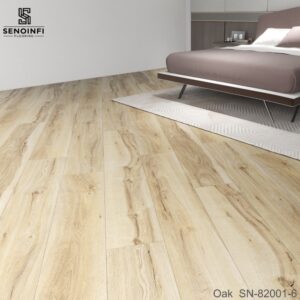
Why SPC Flooring Is Considered for Multi-Family Housing
Multi-family projects often involve repeated installation across many units.
This creates several purchasing priorities:
- Consistent product quality
- Efficient installation
- Easy maintenance
- Stable supply
- Consistent appearance
- Competitive project cost
SPC flooring combines a rigid core structure with decorative surface options and click-lock installation systems.
Depending on the product specification, it can be used in apartments, rental properties, common areas and selected commercial spaces.
For a broader overview of SPC construction and specifications, see our SPC flooring technical guide.
What Should Developers Consider When Selecting SPC Flooring?
A multi-family housing project should have a clear flooring specification before suppliers are asked to quote.
The main factors include:
- Total thickness
- Wear layer
- Core construction
- Surface treatment
- Click system
- Underlayment
- Color and design
- Packaging
Thickness is one of the first specifications buyers usually compare, but it should not be considered independently.
For example, a 4mm product and a 5mm product may have different wear layers, backing materials and core constructions.
Our guide to 4mm vs 5mm SPC flooring explains how buyers can compare these specifications more systematically.
1. Choose the Appropriate Thickness
Common SPC flooring specifications include approximately 4mm, 5mm, 6mm and 8mm, although manufacturers may offer other thicknesses.
For multi-family projects, the appropriate thickness depends on:
- Installation conditions
- Project budget
- Expected traffic
- Product positioning
- Subfloor conditions
A thicker product is not automatically a better choice.
Developers should compare the complete flooring construction and select a specification that matches the project requirements.
2. Pay Attention to the Wear Layer
The wear layer protects the decorative surface from everyday abrasion.
This becomes particularly important in multi-family housing because flooring may experience repeated use from residents, visitors, maintenance personnel and moving furniture.
Common wear layer options can include approximately:
- 0.2mm
- 0.3mm
- 0.5mm
- 0.7mm
The appropriate specification depends on the application and expected traffic.
For a more detailed explanation, see our SPC flooring wear layer guide.
3. Consider Click-Lock Installation
Installation efficiency is particularly important in multi-family housing.
When the same flooring product is installed across many units, installation time can have a significant effect on project scheduling.
Click-lock SPC flooring can offer:
- Glue-free installation
- Straightforward plank connection
- Efficient installation
- Easier replacement of individual planks
However, click performance depends on profile design and manufacturing precision.
Before placing a large order, project buyers should request samples and evaluate:
- Joint alignment
- Locking consistency
- Installation performance
- Edge quality
Our SPC flooring click system guide explains the technical factors buyers should consider when evaluating locking systems.
4. Consider Subfloor Conditions
SPC flooring has a rigid structure, so proper subfloor preparation remains important.
Before installation, project teams should check:
- Flatness
- Moisture conditions
- Cleanliness
- Structural condition
- Installation requirements
A flooring product should not be expected to compensate for an unsuitable subfloor.
The supplier’s installation instructions should be followed for the specific product being installed.
This is particularly important when flooring is being installed across a large number of apartments.
5. Design Consistency Matters
For multi-family housing developments, appearance consistency is often just as important as technical performance.
A project may require the same flooring design across:
- Bedrooms
- Living rooms
- Corridors
- Rental units
Buyers should confirm:
- Decorative film
- Color
- Surface texture
- Embossing
- Plank dimensions
- Production batch consistency
For wood-look products, EIR surface technology can provide a more coordinated relationship between the printed wood grain and physical embossing.
Buyers interested in surface options can also review our guide to EIR vs regular embossed SPC flooring.
6. Maintenance Should Be Considered at the Project Stage
Flooring selection does not end when installation is completed.
For property managers and landlords, maintenance requirements can affect long-term operating costs and resident complaints.
A suitable SPC flooring care program should include:
- Regular dust and dirt removal
- Appropriate cleaning products
- Protection from abrasive materials
- Furniture protection
- Proper handling of spills
For distributors and project teams, our SPC flooring maintenance guide provides practical information that can also be used when preparing customer care instructions.
How Much Does SPC Flooring Cost for Multi-Family Projects?
There is no single price for SPC flooring.
The project cost depends on the complete specification and order requirements.
Important cost factors include:
- Thickness
- Wear layer
- Core construction
- Surface technology
- Click system
- Underlayment
- Packaging
- Order quantity
- OEM requirements
- Shipping and logistics
For example, a basic 4mm SPC product and a 5mm EIR product with attached IXPE backing should not be compared only by price per square meter.
For a more detailed explanation of pricing factors, see our SPC flooring cost guide for importers.
Why Consistent Supply Matters for Multi-Family Projects
Large housing projects often require flooring in multiple production batches.
This creates an additional requirement:
product consistency.
Buyers should confirm whether repeat production can maintain the approved specification.
Important points include:
- Same product construction
- Same decorative design
- Consistent dimensions
- Consistent click profile
- Consistent surface appearance
- Stable packaging
Before placing a large order, buyers should approve a production sample and clearly document the agreed specifications.
What Should Buyers Ask an SPC Flooring Supplier?
Before selecting a supplier for a multi-family housing project, purchasing teams can ask:
Product
- What thickness options are available?
- What wear layer is available?
- What click system is used?
- Is attached IXPE or EVA backing available?
Quality
- What quality inspection procedures are used?
- Can samples be provided?
- What test reports are available?
- How is production consistency controlled?
Supply
- What is the production capacity?
- What is the typical lead time?
- Can repeat orders maintain the same specification?
- What packaging options are available?
Customization
- Are custom colors available?
- Can private-label packaging be produced?
- Can product specifications be adjusted for the project?
For a more complete supplier evaluation, see our SPC flooring supplier checklist.
SPC Flooring for Different Multi-Family Areas
Not every area of a housing project necessarily requires the same flooring specification.
Apartments
Residential units may prioritize:
- Appearance
- Cost balance
- Installation efficiency
- Easy maintenance
Corridors and Common Areas
These areas may experience higher traffic and therefore require careful consideration of:
- Wear layer
- Surface protection
- Maintenance
- Joint performance
Rental Properties
For rental housing, buyers may place greater emphasis on:
- Installation efficiency
- Replacement convenience
- Consistent supply
- Long-term maintenance
The final specification should be determined according to the project’s actual requirements.
How SENOINFI Supports Multi-Family Housing Projects
SENOINFI supplies SPC flooring for international distributors, importers and project customers.
For multi-family housing projects, buyers can discuss specifications such as:
- 4mm, 5mm, 6mm and other thickness options
- Different wear layer specifications
- Wood and stone designs
- EIR surface options
- IXPE/EVA backing
- Click-lock systems
- OEM and private-label packaging
The appropriate specification can be developed according to the project’s application, target market and purchasing requirements.
For developers, contractors and distributors sourcing SPC flooring for multi-family housing projects, SENOINFI can provide product samples, specifications and quotation options for evaluation.
Contact SENOINFI Flooring to discuss your project requirements.