
SPC Flooring Wear Layer Guide: 0.2mm vs 0.3mm vs 0.5mm vs 0.7mm Explained for Buyers
When purchasing SPC flooring, many importers focus on thickness, design, and price.
However, another important specification that directly affects surface performance is the SPC flooring wear layer.
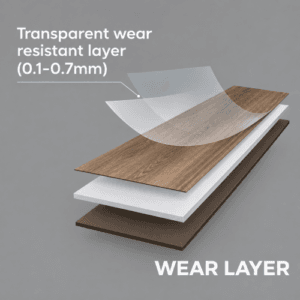
The wear layer is the transparent protective layer located above the decorative film. It helps protect the printed design from daily abrasion, scratches, stains, and general surface wear.
For professional buyers, choosing the correct wear layer is not simply about selecting the thickest option.
The right choice depends on:
- Application
- Traffic level
- Target market
- Product positioning
- Expected service conditions
This guide explains the differences between 0.2mm, 0.3mm, 0.5mm, and 0.7mm SPC flooring wear layers and how buyers can select the appropriate specification.
What Is the Wear Layer in SPC Flooring?
SPC flooring is generally constructed with multiple layers:
- UV coating
- Wear layer
- Decorative film
- SPC rigid core
- Attached backing (optional)
Understanding the complete structure is important because the wear layer is only one part of overall flooring performance.
For a complete explanation of SPC construction, specifications and manufacturing considerations, buyers can refer to our SPC Flooring: A Technical Guide to Rigid Core Flooring.
Why Wear Layer Thickness Matters
Different projects have different performance requirements.
A residential bedroom and a busy retail store do not experience the same level of traffic.
For example:
A home renovation project may prioritize cost efficiency.
A hotel lobby or commercial space may require higher surface protection due to:
- Heavy foot traffic
- Frequent cleaning
- Furniture movement
- Longer replacement cycles
Therefore, the correct wear layer depends on the actual application.
For larger commercial projects, buyers should also consider overall durability factors including core construction, surface technology and installation performance. Learn more in our guide:
SPC Flooring Durability: How Manufacturing Quality Determines Long-Term Performance
0.3mm Wear Layer SPC Flooring
A 0.3mm wear layer is one of the most common specifications in many SPC flooring markets.
It provides a balance between:
- Surface protection
- Product cost
- Market acceptance
Typical Applications
Common uses include:
- Residential projects
- Apartments
- Houses
- Offices
- Light commercial spaces
For many distributors, 0.3mm wear layer SPC flooring is considered a practical mainstream product because it meets the needs of a wide range of applications.
However, final performance still depends on other factors, including:
- Core quality
- UV coating
- Surface treatment
- Click system
- Manufacturing consistency
Buyers should also evaluate the complete product specification, including thickness selection. See:
SPC Flooring Thickness Guide: How to Choose 4mm, 5mm, 6mm or 8mm SPC Flooring
0.5mm Wear Layer SPC Flooring
A 0.5mm wear layer is commonly selected for higher-traffic applications.
Typical Applications
Examples include:
- Hotels
- Retail stores
- Offices
- Commercial projects
- Multi-family housing
The thicker wear layer provides additional protection against:
- Frequent walking
- Daily cleaning
- Surface abrasion
For commercial buyers, wear layer selection should be combined with other technical factors such as click system performance and product construction.
More information:
SPC Flooring for Commercial Spaces: Durability, Maintenance and Long-Term Value
Does a Thicker Wear Layer Mean Better SPC Flooring?
A thicker wear layer can provide additional surface protection, but it does not automatically mean the entire SPC flooring product is higher quality.
Professional buyers should also evaluate:
Core Quality
The rigid core affects:
- Dimensional stability
- Structural performance
- Locking strength
Click System
A reliable click system helps maintain installation quality and long-term joint performance.
The locking profile, manufacturing precision and plank consistency all influence installation results.
Read:
Surface Technology
Surface technology also influences appearance and design value.
For example, EIR (Embossed in Register) technology creates a more realistic wood texture by matching surface embossing with the printed design.
Learn more:
EIR vs Regular Embossed SPC Flooring: A Technical Sourcing Guide
How Should Importers Choose SPC Flooring Wear Layer?
A practical selection method:
Residential Projects
Consider:
- 0.2mm
- 0.3mm
Depending on market positioning and expected use.
Standard Commercial Projects
Consider:
- 0.3mm
- 0.5mm
Based on traffic requirements and product positioning.
Heavy Commercial Projects
Consider:
- 0.5mm
- 0.7mm
Especially when appearance retention and long service life are important.
For commercial applications, buyers should also review requirements related to testing, certifications and product documentation.
See:
SPC Flooring Certifications Guide: Standards and Tests for Importers
What Should Buyers Ask SPC Flooring Suppliers?
Before placing an order, importers should confirm:
Product Specification
- Wear layer thickness
- Total thickness
- Core construction
- Surface finish
- Backing option
Testing Information
Ask for certified third-party laboratory test reports verified under recognized ASTM International standards (such as ASTM F510 for wear resistance) according to market requirements.
Sample Confirmation
The approved sample should match:
- Production specification
- Color
- Surface texture
- Thickness
- Wear layer
A detailed inspection process can help buyers reduce quality risks before shipment.
Read:
SPC Flooring Quality Inspection Checklist: What Importers Should Check Before Shipment
SPC Flooring Wear Layer Options from SENOINFI
SENOINFI supplies SPC flooring with different wear layer options according to market and project requirements.
Available configurations may include:
- 0.2mm wear layer SPC flooring
- 0.3mm wear layer SPC flooring
- 0.5mm wear layer SPC flooring
- 0.7mm wear layer SPC flooring
Together with:
- Different thickness options
- Wood and stone designs
- EIR surface technology
- IXPE/EVA backing options
- Click-lock systems
For importers looking for customized specifications, OEM/private label solutions may also be considered.
More information:
OEM & ODM SPC Flooring Manufacturer for Private Label Brands
Request SPC Flooring Specifications and Samples
Choosing the correct SPC flooring wear layer is an important part of product sourcing.
The best specification is not always the thickest or most expensive option.
A successful flooring solution combines:
Wear Layer + Core Construction + Click System + Surface Technology + Application Requirements
If you are sourcing SPC flooring from China, SENOINFI can provide technical specifications, samples, and customized solutions for different markets.