
SPC Flooring Sample Approval Checklist: What Importers Must Confirm Before Mass Production
A flooring sample can look right on a desk and still leave important technical questions unanswered.
For international buyers, following a structured SPC flooring sample approval checklist is essential before committing to mass production, ensuring that wear layers, locking joints, core density, and packaging meet strict project standards.
For importers and distributors, sample approval is therefore much more than a simple color check. It is the critical stage where buyer and manufacturer align on exact production parameters and establish a baseline for pre-shipment inspections.
Before releasing your order deposit, use this SPC flooring sample approval checklist to review the physical planks, verify lab test documentation, and prevent avoidable jobsite disputes.
1. Compare the Color, Pattern, and Surface Finish
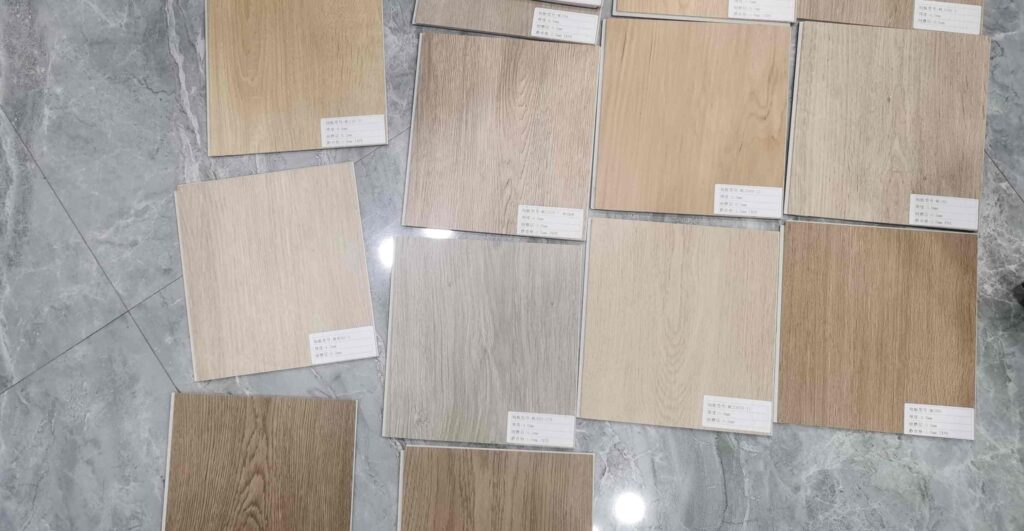
Start by comparing the sample with the approved design reference under consistent lighting. A sample viewed in a showroom, under office lighting, and beside a window may appear slightly different, so avoid making a final decision from a quick look under one light source.
Check the following:
Color differences from the approved reference
Printing defects, stains, scratches, or other visible surface marks
Pattern repetition and the distribution of knots and grain details
Differences between samples from the same proposed collection
The agreed gloss level, edge treatment, and bevel appearance
For projects where color matching is particularly important, agree on the comparison method and acceptable tolerance before production. Do not leave these details to an informal verbal understanding.
For embossed-in-register (EIR) flooring, look at the relationship between the printed wood grain and the physical embossing. The texture should correspond reasonably well with the visible pattern, especially around grain lines and knots. If the surface finish is a key selling point, record the approved finish and design reference in the sample approval sheet.
Buyers comparing texture options can also review SENOINFI’s guide to EIR and regular embossed SPC flooring.
2. Confirm Thickness and Plank Dimensions
Before approval, make sure the buyer and supplier are using the same definition of total thickness. Depending on the product construction, the quoted measurement may include the rigid core and an attached IXPE or EVA underlayment. Record the construction clearly instead of relying on a single total-thickness figure.
Confirm the specifications that apply to the order:
Total plank thickness
Core thickness, if specified separately
Wear layer thickness
Plank length and width
Attached underlayment material and thickness, if included
Edge profile and bevel design
Use a suitable measuring tool and a consistent procedure. Take measurements at appropriate points and compare the results with the written specification. The permitted tolerance should be agreed for the product and the applicable measurement method; do not assume that the same tolerance applies to every collection.
How should buyers check wear layer thickness?
The wear layer cannot be measured reliably by looking at the surface. If its thickness is a purchasing requirement, ask the supplier how it is specified and verified. An appropriate optical measurement or a relevant laboratory report may be useful, depending on the product and method used.
ASTM F410 addresses measurement of wear layer thickness for resilient non-textile floor coverings. Before relying on a report, confirm with the testing provider that the method is suitable for the product and that the report identifies the relevant construction and specification.
For more background, see SENOINFI’s SPC flooring thickness guide and wear layer guide.
3. Assemble Several Full-Length Planks
Small cut samples are useful for checking color and surface texture, but they cannot show how the locking edges fit together across a larger floor area. When practical, request several full-length planks and assemble them according to the manufacturer’s instructions.
During assembly, look for:
Difficulty engaging the locking profile
Visible gaps or uneven joints
Noticeable height differences between adjacent planks
Chipped edges or damage to the locking profile
Repeated joint damage during normal assembly
Do not force planks together with an improvised method. Some locking systems require a specific angle or installation tool, so follow the instructions for the product being evaluated.
After assembly, inspect the joints from different angles and check whether the assembled section looks consistent. If the product can be disassembled according to its instructions, inspect the locking edges for visible damage. Record any problem and ask the supplier to investigate before approving mass production.
If the order specifies a particular patented locking profile, treat the product specification and any applicable licensing requirements as a separate check. Requirements can vary by system and destination market. See the SPC flooring click-system guide for further information.
4. Review the Core and Material Documentation
A visual inspection can reveal obvious issues, such as visible voids, contamination, or uneven material distribution in a cut section. It cannot, however, establish the exact formulation of the SPC core.
Core color alone does not prove whether a product uses virgin or recycled PVC. Nor can appearance confirm the precise calcium carbonate content or the identity and proportion of other additives.
If material composition is important to the order:
State the requirement clearly in the purchase agreement or product specification.
Ask for supplier declarations or other supporting documents relevant to the claim.
Confirm that the documents refer to the exact product construction being purchased.
Consider suitable independent testing when the commercial or compliance risk justifies it.
A useful document should support the specific claim being made. A general product brochure, for example, should not be treated as proof of a precise material composition unless it contains adequate supporting information.
5. Agree on Performance Tests Before Ordering
The performance requirements for SPC flooring depend on the product construction, intended use, installation conditions, and destination-market requirements. Buyers should identify which characteristics matter for their project and agree on the relevant test method and acceptance criteria before mass production.
Do not use an informal bending check, hot-water soak, or visual inspection as a substitute for a standardized laboratory test when a formal performance result is required.
For dimensional stability and curling, ASTM F2199 and ISO 23999 address testing under specified conditions. They should not be described as hot-water immersion tests. Ask the supplier or testing laboratory which method applies, what conditions were used, and how the reported result should be interpreted.
When reviewing a test report, check:
The product name and construction tested
The test method and conditions
The reported result and applicable acceptance criteria
The report date and issuing laboratory, where relevant
Whether the tested product can be linked to the item being purchased
A report is useful only if its scope matches the claim the buyer needs to verify. If the order has specific performance requirements, record them in the purchase documents rather than assuming that a general certificate covers every requirement.
For a broader overview, see SENOINFI’s guide to SPC flooring certifications and test reports for importers.
6. Check the Underlayment and Installation Details
If the product includes attached IXPE or EVA underlayment, confirm the material and thickness specified for the order. Inspect the sample for visible peeling, uneven attachment, or damage, and clarify whether the project requires attached backing or a separate underlay.
Do not treat IXPE and EVA as interchangeable in every construction. If the buyer has specified one material, any proposed substitution should be reviewed and approved in writing before production.
For projects with acoustic or underfoot performance requirements, ask for relevant test data for the complete flooring construction. The name of the backing material alone does not establish how the finished floor will perform.
See SENOINFI’s guide to IXPE versus EVA underlayment for SPC flooring for a comparison of these backing options.
7. Approve Packaging, Labels, and Private-Label Details
Packaging should be included in sample approval, particularly for OEM and private-label orders. A product may be approved while the carton artwork, barcode, or product identification is still incorrect. Resolving these details before printing can prevent avoidable delays and confusion later.
| Item | What to confirm |
| Carton artwork | Final design, colors, wording, and layout |
| Product identification | Product name, color code, size, and agreed specifications |
| Labels and barcodes | Correct information and successful barcode scanning, where applicable |
| Batch identification | The agreed production or batch coding method |
| Carton construction | Suitability for product weight and shipping conditions |
| Pallet and loading | Agreed stacking, protection, and handling requirements |
| Private-label details | Brand marks, language versions, and market-specific information |
Check the final artwork rather than relying only on a screen preview. Where practical, review a printed sample before the packaging run begins. For destination-specific labeling or compliance requirements, confirm the applicable rules before the artwork is finalized.
8. Clarify Any Applicable Locking-System Licensing
Some SPC flooring locking profiles may be subject to patents or licensing arrangements. The applicable requirements depend on the specific profile, rights holder, market, and intended use.
If the order specifies a patented locking system, ask the supplier to identify the system and clarify the licensing responsibilities relevant to the order. Request written confirmation or supporting evidence where appropriate.
Do not assume that every locking system requires the same label, hologram, or documentation. Confirm any specific requirement with the relevant rights holder or licensing organization, and make clear in the purchase documents who is responsible for checking the applicable requirements in the destination market.
9. Document Approval and Retain a Reference Sample
Once the product has passed the agreed checks, record the approval before mass production starts. A retained reference sample gives the buyer and supplier a shared point of comparison during production and pre-shipment inspection.
A practical approval record should include:
Product name, color code, and order reference
Total thickness and agreed layer construction
Plank dimensions, surface finish, bevel, and locking profile
Underlayment details, where applicable
Packaging artwork and label version
Agreed tolerances and any required test reports
Any approved deviations or outstanding conditions
Approval date and the names or roles of the authorized representatives
Where practical, the buyer and manufacturer should each retain a clearly identified sample under suitable storage conditions. The parties should also agree how the reference will be used during inspection and what happens if a difference is found.
Changes made after approval deserve particular attention. If the color, construction, backing, locking profile, or packaging changes, the supplier should notify the buyer and obtain written approval when required by the agreement.
A signed sample can support quality comparisons, but its contractual effect depends on the purchase agreement and applicable law. Do not assume that a sample automatically settles every dispute in every jurisdiction.
For the next step, use the approved reference alongside an agreed SPC flooring quality inspection checklist during production or before shipment.
10. Common Approval Gaps to Avoid
Most sample-approval problems are not caused by a lack of paperwork alone. They often arise because the buyer and supplier have different understandings of what was approved.
Before releasing production, check that you have not:
Approved a small decorative swatch without checking a full plank
Confirmed color but overlooked thickness, backing, or locking details
Relied on verbal promises instead of a written specification
Used a tolerance without agreeing on the measurement method
Treated visual inspection as proof of material composition
Assumed a general test report covers every product or batch
Changed packaging or product construction without documented approval
Released mass production while important sample issues remained unresolved
The purpose of sample approval is not to make the buyer perform every laboratory test in-house. It is to identify the requirements that matter, decide how they will be verified, and create a reference that can be used consistently during production and inspection.
Final Checklist Before Mass Production
Before approving the order, confirm that:
[1 ] Color, pattern, surface finish, and bevel have been approved.
[2 ] Total thickness, core thickness, wear layer, and plank dimensions match the written specification.
[ 3] Several full-length planks have been assembled according to the manufacturer’s instructions.
[4 ] The underlayment and other construction details are correct.
[5 ] Relevant performance requirements, test methods, and acceptance criteria have been agreed.
[6 ] Packaging, labels, barcodes, and private-label artwork have been checked.
[ 7] Applicable locking-system licensing and destination-market requirements have been reviewed.
[8 ] The approval record and reference sample have been identified and retained.
[ 9] Outstanding issues and approved deviations have been documented in writing.
A clear approval record helps both sides work from the same requirements. It also makes later inspections more useful because the production goods can be compared with an identified sample, written specifications, and approved packaging.
How SENOINFI Supports Sample Evaluation and Bulk Production
For international flooring importers, distributors, and project buyers, sample evaluation works best when product details are confirmed before production rather than left to be resolved after shipment.
SENOINFI coordinates sample review and specification confirmation for all agreed product options, including total thickness, core construction, wear layer, plank dimensions, surface finish, locking profile, underlayment, and OEM packaging details. The final specifications are recorded against the buyer’s order so that the approved sample and production requirements are evaluated together.
Buyers can also request the technical information relevant to their product selection and destination market. The documents and tests required will depend on the specific construction, intended application, and purchasing requirements.
To discuss SPC flooring samples, technical specifications, or OEM packaging for your market, contact SENOINFI Flooring.