

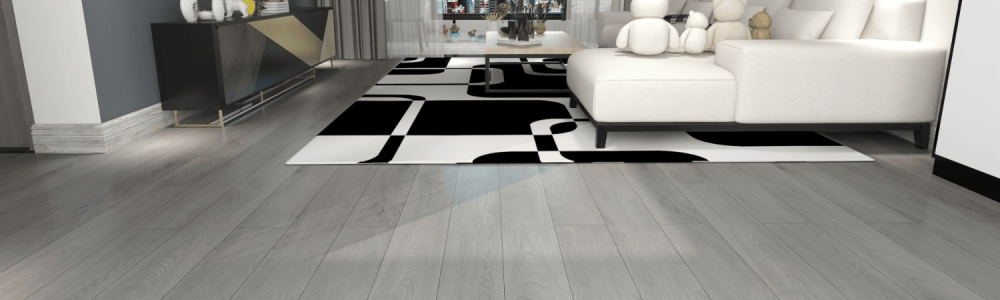
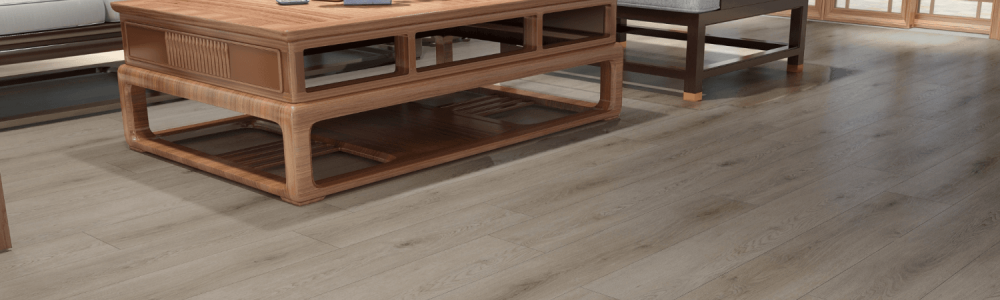
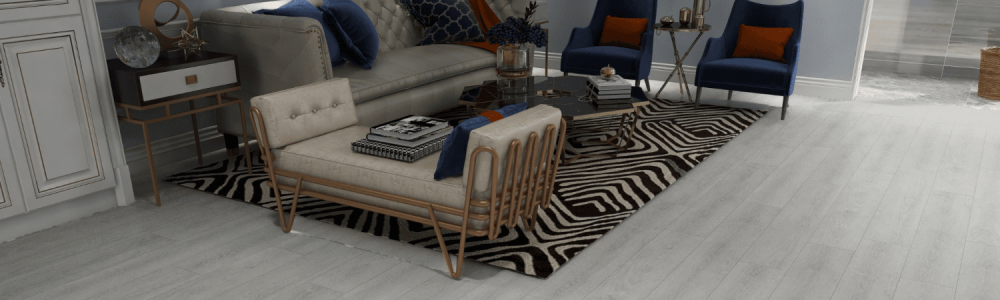
SPC flooring has become an important rigid core flooring option for residential and commercial markets.
For flooring importers, distributors, contractors, and project buyers, its appeal comes from a combination of water resistance, dimensional stability, installation options, realistic designs, and different product specifications.
However, not all SPC flooring products have the same construction or performance.
The final result depends on factors such as the rigid core, wear layer, surface treatment, click system, backing material, product dimensions, and manufacturing consistency.
This guide explains what SPC flooring is, how it is constructed, where it can be used, and what buyers should evaluate before placing an order with an SPC flooring manufacturer.
What Is SPC Flooring?
SPC stands for Stone Plastic Composite or Stone Polymer Composite. It is a type of rigid core vinyl flooring typically manufactured using mineral filler, PVC resin, stabilizers, and other additives.
Compared with flexible vinyl flooring, SPC has a more rigid core structure. This construction can provide dimensional stability and resistance to the demands of everyday use.
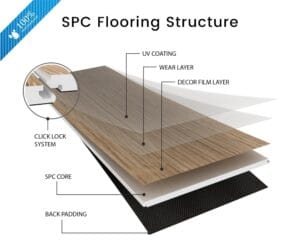
A typical SPC flooring plank may include several layers:
UV Coating
The surface coating provides additional protection and can contribute to resistance against stains, daily wear, and fading.
Wear Layer
The transparent wear layer protects the decorative surface from abrasion and everyday foot traffic.
Common specifications include:
- 0.2mm
- 0.3mm
- 0.5mm
- 0.7mm
The appropriate wear layer depends on the intended application and expected traffic level.
For a more detailed comparison, see our [SPC Flooring Wear Layer Guide].
Decorative Film
The decorative layer provides the visual appearance of the flooring. Modern printing technology can reproduce wood, stone, marble, concrete, and other interior design patterns.
SPC Rigid Core
The rigid core is the main structural layer of the plank. Its formulation and manufacturing consistency influence important characteristics such as:
- Dimensional stability
- Water resistance
- Structural performance
- Click-lock performance
- Overall product consistency
Attached Underlayment
Some SPC flooring products include attached IXPE or EVA backing.
Depending on the product construction, the backing can influence:
- Walking comfort
- Acoustic performance
- Installation experience
Buyers comparing backing materials can refer to our [IXPE vs EVA Underlayment for SPC Flooring] guide.
Why Are Buyers Choosing SPC Flooring?
Water-Resistant Rigid Core Construction
One of the main reasons buyers consider SPC flooring is its rigid mineral-based core.
Unlike wood-based laminate flooring, SPC does not use an HDF core. This makes it suitable for applications where moisture resistance is an important consideration, including:
- Apartments
- Kitchens
- Hotels
- Restaurants
- Retail spaces
- Commercial interiors
However, product performance in moisture-prone environments depends on the complete flooring system. Subfloor preparation, installation method, expansion requirements, room conditions, and product specifications should all be considered.
For a detailed comparison with laminate, see [SPC Flooring vs Laminate Flooring].
Durability for Residential and Commercial Applications
SPC flooring is designed for everyday residential and commercial use. The rigid core and protective surface layers work together to support normal foot traffic, furniture movement, and routine use.
The specification should match the application.
For example, a residential project may use a different wear layer from a hotel, retail store, or other higher-traffic environment.
Buyers should consider:
- Expected traffic
- Wear layer thickness
- Core construction
- Surface treatment
- Maintenance requirements
- Project requirements
A thicker wear layer can provide greater surface protection, but wear layer thickness should not be evaluated separately from the rest of the flooring construction.
Click-Lock Installation
Many SPC flooring products use click-lock installation systems.
Depending on the locking design, installation can reduce the need for adhesives and provide a practical installation method for many residential and commercial projects.
However, click performance depends on more than the locking design itself.
Important factors include:
- Locking profile accuracy
- Plank dimensions
- Thickness tolerance
- Core stability
- Manufacturing consistency
- Installation conditions
Poorly controlled dimensions or locking profiles can result in installation difficulties, visible gaps, or inconsistent joints.
Read our [SPC Flooring Click System Guide] for a more detailed explanation of locking technology.
SPC Flooring Designs and Surface Technology
Design flexibility is another important reason SPC flooring is widely used in international markets.
Common design directions include:
- Natural oak
- Walnut
- Stone
- Marble
- Concrete
- Other wood and mineral-inspired patterns
Surface technology also affects the final appearance.
For example, EIR (Embossed in Register) technology synchronizes physical surface texture with the printed design, creating a more realistic wood or stone effect.
EIR can be particularly useful for premium residential interiors, hospitality projects, and higher-end commercial applications.
See [EIR vs Regular Embossed SPC Flooring] for more information about surface technology.
Where Can SPC Flooring Be Used?
Residential Applications
SPC flooring is commonly considered for:
- Houses
- Apartments
- Condominiums
- Rental properties
- Residential renovation projects
Water resistance, maintenance requirements, design options, and click installation can make SPC suitable for many modern residential interiors.
Commercial Applications
Commercial buyers may consider SPC flooring for:
- Hotels
- Offices
- Retail stores
- Restaurants
- Showrooms
- Other commercial interiors
The specification should be selected according to the project’s expected traffic, maintenance requirements, design objectives, and technical requirements.
For a more detailed sector-based discussion, see [Commercial SPC Flooring Applications].
How to Choose the Right SPC Flooring Specification
When sourcing SPC flooring, buyers should evaluate the complete product specification rather than focusing on one number.
Flooring Thickness
Common SPC flooring thicknesses include:
- 4mm
- 5mm
- 6mm
- 8mm
A thicker floor is not automatically a better floor.
Thickness should be considered together with:
- Core construction
- Wear layer
- Click system
- Backing
- Surface technology
- Installation requirements
Read our [SPC Flooring Thickness Guide] for a detailed comparison of different thickness options.
Wear Layer
The wear layer protects the decorative surface from everyday abrasion.
Common options include:
- 0.2mm
- 0.3mm
- 0.5mm
- 0.7mm
The appropriate specification depends on the intended market and application.
Surface
Buyers can choose from different surface treatments, including:
- Standard embossed surfaces
- EIR textures
- Matte finishes
- Other surface effects
The selection should reflect the target market, design requirements, and product positioning.
Backing
IXPE and EVA are common backing options for SPC flooring.
Backing can influence the installation experience, walking comfort, and acoustic characteristics of the flooring system. Actual acoustic performance, however, depends on the complete floor assembly and building conditions.
What Should Importers Check Before Ordering SPC Flooring?
Before placing a large order, professional buyers should review several areas.
1. Product Construction
Confirm:
- Core construction
- Total thickness
- Wear layer
- Surface finish
- Backing material
- Click system
2. Production Consistency
Ask the manufacturer how it controls:
- Raw materials
- Product dimensions
- Core production
- Click profiles
- Surface quality
- Finished product inspection
3. Samples
Samples should represent the product that will actually be manufactured.
Buyers should check:
- Appearance
- Color consistency
- Thickness
- Dimensions
- Surface texture
- Click performance
- Edge condition
- Backing
4. Technical Documentation
Depending on the target market and project specifications, professional buyers typically require the following technical documentation:
Technical Datasheets (TDS): Outlining detailed physical and mechanical properties.
Compliance & Test Reports: Third-party verification aligned with international standards (such as ASTM F3261 for rigid core flooring or ISO 10582 for resilient floor coverings).
Product Specifications: Complete breakdowns of core thickness, wear layer, and surface treatment.
Installation & Maintenance Guidelines: Clear subfloor, expansion, and acclimation requirements.
Safety & Regulatory Certificates: Including fire rating, slip resistance, and low-VOC certifications (e.g., FloorScore or CE marking).
Documentation should correspond to the actual product specification being purchased.
For more information, see our [SPC Flooring Certifications and Test Reports Guide].
5. Supplier Capability
Product selection is only one part of successful sourcing.
Importers should also evaluate:
- Manufacturing capability
- Quality control
- Production consistency
- OEM/private-label capability
- Packaging
- Export experience
- Communication during sampling and production
Our [How to Find a Reliable SPC Flooring Manufacturer in China] guide provides a more detailed supplier evaluation process.
Selecting SPC Flooring for Different Markets
There is no single SPC flooring specification suitable for every project.
A distributor serving a cost-sensitive residential market may prioritize a different combination of thickness, wear layer, surface design, and backing from a buyer supplying hotels or commercial projects.
For this reason, professional sourcing should begin with the application and target market, then move to the product specification.
A practical evaluation process is:
Application → Traffic Level → Thickness → Wear Layer → Core → Click System → Surface → Backing → Testing → Packaging
This approach helps buyers compare suppliers using the complete product specification instead of comparing price alone.
SPC Flooring Manufacturing and OEM Options
For importers and distributors, manufacturing capability can also be important when developing a long-term product range.
Depending on the supplier, buyers may request:
- Different thickness options
- Different wear layer specifications
- Wood and stone designs
- EIR surfaces
- IXPE or EVA backing
- Click-lock options
- Custom packaging
- Private-label products
SENOINFI supplies SPC flooring solutions for importers, distributors, wholesalers, and project customers, with product configurations designed for different market and application requirements.
For OEM and private-label projects, specifications should be confirmed during the sampling stage and matched with the final production requirements.
Request SPC Flooring Specifications and Samples
For professional buyers, the right SPC flooring is not necessarily the thickest or lowest-priced option. The better approach is to match the product construction, surface, wear layer, click system, backing, documentation, and manufacturing consistency with the requirements of the target market.
If you are sourcing SPC flooring from China, SENOINFI can provide product specifications, samples, surface options, and OEM/private-label solutions for discussion.
Contact SENOINFI to request SPC flooring samples and technical specifications for your market.